The most common mistake visitors make with a ryokan is to treat it as a hotel with bamboo. It is a different thing: a small inn with its own rhythm, where the evening has a shape and the staff run the day, not you. Once you understand that rhythm, choosing a good one becomes much easier.
The rhythm of a night
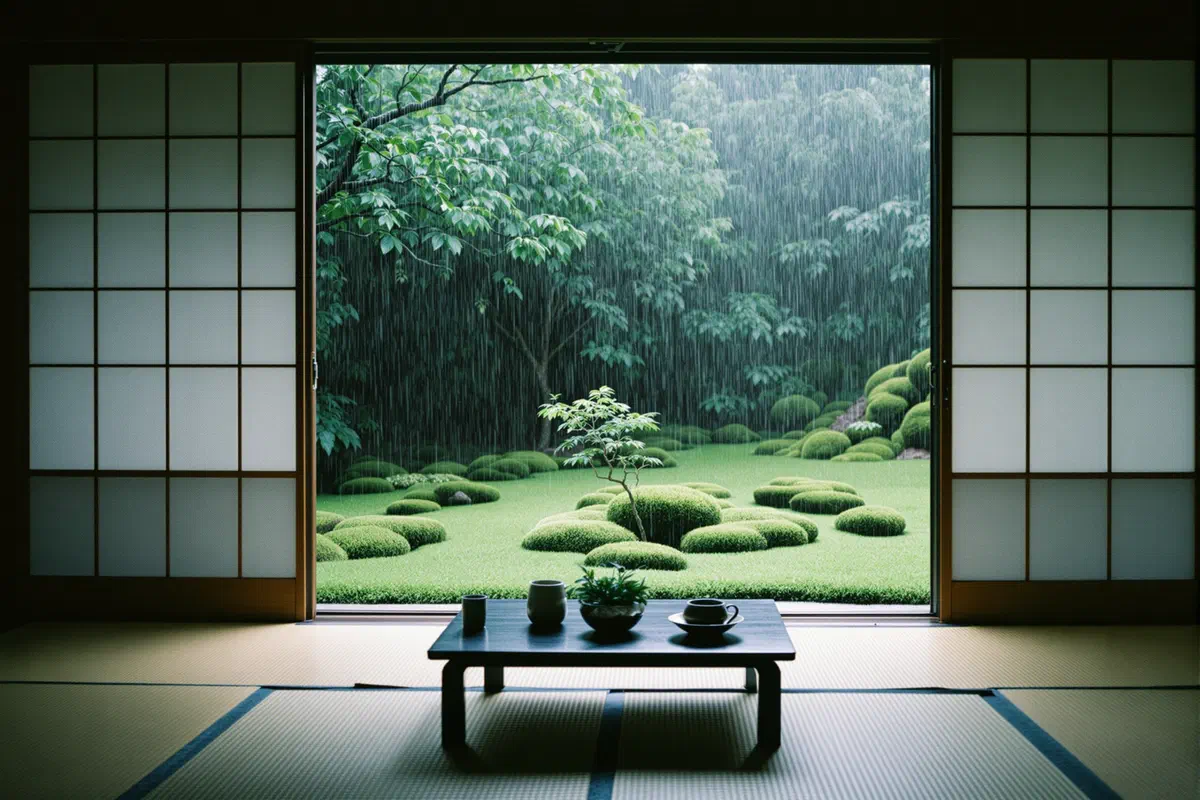
You arrive around three or four in the afternoon. Someone takes your shoes, brings you tea and a sweet, and walks you to a room with tatami floors and a low table. You change into a yukata, take a bath, and sit down to dinner at six or seven. Dinner is the centrepiece: a kaiseki meal of many small courses, built around the season and the region, served in your room or in a private dining room. While you eat, the staff remove the table and lay out futons.
There is no flexibility in this, and I would say that is its charm. If you turn up at nine in the evening, you will have missed dinner, and a good ryokan will not be able to reproduce it. So the first rule is simple: arrive before dark, and plan the rest of the day around it. A journey that squeezes a ryokan between a late train and an early flight is wasting its best feature.
What to look for
Size matters more than stars. Most of the best ryokan have fewer than twenty rooms, and the best of all have ten. The staff then know your name, remember your preferences, and can adapt the meal if you do not eat shellfish. Larger places can be wonderful too, but they tend to run on a conveyor belt of identical courses.
Ask about the bath. Some rooms have a private open-air bath, called a rotenburo, filled with spring water. Others have shared baths, usually separated by sex, with fixed times. Many Japanese onsen still refuse entry to guests with visible tattoos, though more are relaxing the rule. If this is a concern, tell us, and we will choose a place with private baths. Not every setting is suitable for every guest, and it is better to learn this in the planning than at the door.
Look closely at the setting, too. In Kyoto, the best are tucked into quiet lanes, behind a wooden gate and a small garden. In the mountains, such as at Yunomine Onsen in the Kii Peninsula, the village itself is the attraction, with steaming streams and a bathhouse built over the spring. On the coast, you want a window on the sea. A ryokan with a view of a car park is a poor choice, however fine the food.
Common mistakes
The first is staying too briefly. A single night is a taste. Two nights lets you settle, walk, bathe twice and take breakfast without hurrying. The second is mixing too many styles: a ryokan in every town can become repetitive. I usually suggest two or three in a fortnight, interleaved with a good modern hotel, so that each stay feels distinct and your back gets a proper mattress.
The third is language. Staff at the better places are skilled and kind, but not all will speak fluent English, and menus may be in Japanese. This is not a problem if you are prepared. A short note in advance about allergies, preferences and arrival time makes the evening smoother. We deal with this for our guests, and often send a message ahead in Japanese, which is received warmly.
The fourth is expecting silence. Old wooden buildings creak, and thin sliding doors let sound through. If you are a light sleeper, ask for a room away from the corridor. A ryokan is not for everyone, and the trade-off is some noise and a little less privacy than a hotel suite. But when the evening is right, the rice is hot, the bath is empty and the garden is dark, it is hard to beat. In a country of extraordinary hospitality, it is the form of it I would choose first.